Welcome to the Inner Circle of the House of Vere, where luxury boutique offerings meet the timeless elegance of Scottish tartan.
Scottish Heritage Clothing by House of Vere
Luxury Heritage Garments from The Scottish Highlands
Heritage, Identity and the House of Vere Tartan
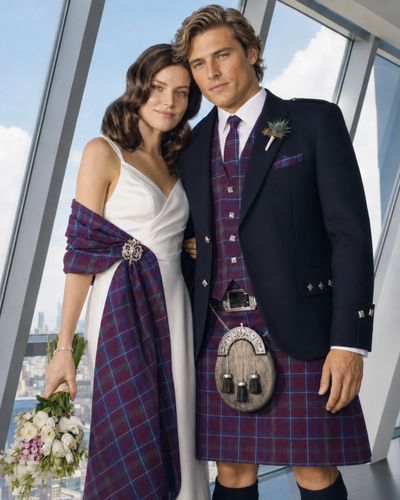
Wearing the House of Vere tartan signifies an appreciation of heritage, identity, and distinction.
For verified members, it also represents a confirmed connection to the Weir/Vere bloodline and carries additional meaning through exclusive membership benefits and discounts.
The vision for House of Vere is to create clothing that embodies heritage, craftsmanship, and distinction. Our garments are not merely tartan; they represent identity, honour, lineage, and legacy.
The House of Vere tartan is deeply rooted in the Weir–de Vere ancestry, while the casual line remains available to those who wish to wear, support, and honour the story. Verified members receive exclusive discounts and benefits as part of their recognised connection to the heritage.
Our Scottish ancestry is not confined to one place. It stretches across the whole of Scotland — from the Highlands and Inverness, through the Isles of Skye, down to Wigtownshire, Dumfriesshire, Lanarkshire, and beyond.
Inverness, often described as the capital or gateway of the Highlands, celebrates our Highland associations and the wider connections with families such as the MacDonalds, Grants, and Logans. These families were not limited to Inverness alone, but formed part of the broader network of Scottish ancestry, kinship, land, and legacy.
The Victoria Street image reflects the connection to Major Thomas Weir, traditionally associated with Edinburgh and descended from the Weirs of Blackwood. This allows the House of Vere story to honour not only the Highland and island connections, but also the Lowland, Border, and wider Scottish branches of the family.
From Inverness to Skye, from Edinburgh to Lanarkshire, from Wigtownshire to Dumfriesshire, the House of Vere tartan represents a family story woven across Scotland.

House of Vere is part of The Royal Dragon Court
Discover the Lineage of The House of Vere
Castle Tioram- McDonald
Castle Tioram- McDonald
Castle Tioram- McDonald

A brief outline of the last 200 years of our history.
Our story begins with our surname, Weir. My grandfather was James Weir. His parents were Thomas Logan Weir and Annie McDonald, who made the journey from Stoney Kirk Wigtownshire to Sussex in 1908. Thomas's parents were John Weir and Mary Logan, and this lineage descends from the McColms and Sinclairs.
Annie McDonald's parents were Andrew McDonald and Sarah Grant. My McDonald heritage hails from a charming fishing village called Moidart, descending from the McDonalds of Sleat and Castle Tioram. The McDonalds were historically known as the Lords of the Isles.
The tale of the MacDonalds of Castle Tioram is intertwined with the history of Clan Ranald, a branch of Clan Donald descended from Reginald, son of Somerled, and the powerful MacRuari heiress, Amy MacRuari. Castle Tioram, located on its tidal island in Moidart, stands not merely as an offshoot of the Lordship of the Isles but as the heart of the ancient MacRuari inheritance known as Garmoran. When John of Islay, Lord of the Isles, set aside Amy to marry a Stewart princess, their son Ranald inherited the ancient MacRuari lands—Moidart, Arisaig, Eigg, Rum, and parts of Knoydart—from which the Clan Ranald chiefs descend. The castle signifies a lineage that maintained its power not due to later Isle of Islay connections but because of the historical rights of the MacRuari line, a detail often overlooked in contemporary clan accounts.
Tioram began to rise to prominence in the fifteenth century when the Clanranald chiefs established it as their principal seat. From this stronghold, they managed the western seaways, governed their lands, and asserted independence not only from the Crown but occasionally from other branches of Clan Donald as well. Much of its early history consists of a continuous cycle of feuding, raiding, and rebuilding. The chiefs engaged in conflicts with their neighbors, cousins in Glengarry and Keppoch, and sometimes even their own internal rivals. During these tumultuous years, Tioram faced fires, sieges, retaking, and defense, serving as a maritime stronghold as much as a residence.
These families intermarried and mingled numerous times, leading to connections with other noble Scottish lines such as The Glens, Bruces, Stewarts, and Hamiltons. Today, their legacy can also be seen in modern Scottish Highlands garments available at a local tartan boutique, reflecting the rich cultural heritage of the region, including the esteemed House of Vere.
Stonebyers- Weir
Castle Tioram- McDonald
Castle Tioram- McDonald
The Weirs of Blackwood and Stonebyers in Lanarkshire represent one of the oldest and most established branches of the Weir family in Scotland. Holding their lands for many centuries, the Stonebyers Weirs appear throughout charters and local records as a respected Lowland lineage with strong ties to neighbouring clans and noble houses such as the McDonalds, Glens, Hamiltons, Douglases, Logans, and Muirs, along with The Stewarts and Bruces. Their presence along the Clyde formed a central part of Weir family identity, anchoring the clan firmly within the history of southern Scotland.
Within this lineage appears Ralph Vere, a figure whose surname reflects the long-standing connection between the Scottish Weirs and the ancient Anglo-Norman de Vere family — the house that produced the historic Earls of Oxford. Ralph is understood to descend from one of the cadet or collateral branches of the de Vere family: lines connected by blood to the Earls of Oxford but not inheriting the earldom itself.
In the medieval and early-modern periods, it was common for younger sons or junior branches of noble Norman houses to settle in Scotland, forming alliances through marriage, landholding, and service. The presence of Ralph Vere within the Stonebyers sphere reflects this pattern, showing how the Weir and de Vere lines came into close association long before the modern era.
This merging of the Scottish Weirs of Stonebyers with a collateral Vere line forms a key ancestral foundation for what becomes the House of Vere today — a heritage that blends ancient Scottish clan blood with one of England’s oldest noble dynasties.
The House of Vere is rooted in my own Scottish heritage through my father’s line, descending from the Weirs, MacDonalds, Logans, and Grants. These families form the backbone of my immediate paternal ancestry and are deeply woven into the history of Scotland itself. The creation of the House of Vere tartans — both the historic Blue Weir and the newly registered Red Weir–de Vere — is a continuation of that legacy, honouring the bloodlines that shaped my family for generations. Additionally, the tartans are celebrated within the Scottish Highlands garments, making them a vital part of my family’s narrative and a tribute to our lineage, which can be found at our local tartan boutique.
Our Tartan represents The Royal Dragon Court

What is the Royal Dragon Court
The Royal Dragon Court, established by Nicholas de Vere in the 1990s, was originally known as The Royal and Imperial Dragon Court under the auspices of The Sovereign Grand Duchy of Drakenberg. Today, the House of Vere continues to be associated with the rich heritage of the Scottish Highlands garments and operates a unique tartan boutique that reflects this legacy.
Why, For what purpose?
The Royal Dragon Court was established after Nicholas discovered his connections to many royal and noble lines throughout history and across the globe. He collaborated closely with Margaret Parry Sheil to verify her genealogy, ensuring her rightful ascent to the Redonda Throne and thereby making her the Queen of Redonda and The Archduke Otto von Habsburg , who intially granted Nicholas the HH title along with granting one to Margret Parry. Margaret's first decision as Queen was to appoint Nicholas as the Fürst Prince of Drakenberg, recognizing Drakenberg as its own entity. This newfound royal connection also inspired a renewed interest in the House of Vere and the rich heritage of Scottish Highlands garments, leading to the launch of a tartan boutique to celebrate these traditions.
The Drakenberg Crest
The Drakenberg Crest symbolises the acceptance from Otto for Nicholas to use the Original crest, it also symbolises, the Earls of Oxford and the House of Vere heritage, along with the many crests that aligned our direct ancestry, reflecting a rich lineage that connects to the Scottish Highlands garments featured in our tartan boutique.
What Does the Royal Dragon Court Do?
Members of the working cogs of The Royal Dragon Court, the inner circle, are all Authors, Historians, Researchers, and Genealogists who are actually related through these same Royal and Noble lines, much like those associated with the House of Vere. Their collective knowledge includes insights not only into royal heritage but also the rich traditions of the Scottish Highlands garments, often showcased in a local tartan boutique.
What proof is there?
Our proof lies in our BLOOD, our DNA, and our ancestral lines. This legacy is documented in our books, including The Dragon Legacy, Transylvania to Tunbridge Wells, The Dragon Cede by Nicholas de Vere, and The Royal Dragon Court INBRED BRITAIN by Abbe de Vere. We also celebrate our heritage through the House of Vere, which is reflected in the upcoming releases from other members published under Dragon Publishing. Additionally, our connection to the Scottish Highlands is honored through our exclusive tartan boutique, showcasing garments that embody our rich history.
The House of Vere MOTTO
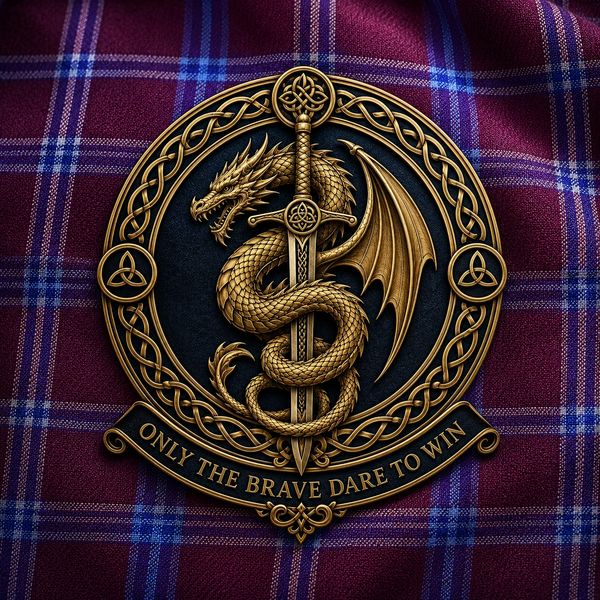
ONLY THE BRAVE DARE TO WIN
A Motto chosen for ambition, drive, integrity.
Only the Brave Dare to Win was chosen because it speaks to something far deeper than heritage alone. It is about the courage it takes to stand again after life has stripped you of everything you thought was safe.
There are moments in life when people lose their home, their confidence, their security, their place in the world, and sometimes even the people they thought would stand beside them. In those moments, all you have left is yourself, your will, and the decision to either remain broken or begin again.
That was once my reality. I know what it means to be at the bottom of the mountain with nothing but determination, faith, and the smallest spark of hope. I also know what it means to climb from that place, step by step, until the life you are living becomes proof that you were never defeated — only rebuilding.
This motto is for everyone who has faced hardship and still chosen to rise. It is for those who have had to rebuild their lives, start again, regain their confidence, create their own path, or build something from nothing. It is for the people who know that bravery is not the absence of fear, but the decision to keep going despite it.
The House of Vere brooch and garments carry this message forward. When someone wears Only the Brave Dare to Win, they are not simply wearing a phrase. They are carrying a reminder of their own strength. A reminder that they have survived difficult chapters. A reminder that they are allowed to be proud of how far they have come.
The motto also honours the older spirit of clan, kinship, and standing together. From the resilience remembered in Scottish clan history to the integrity of those who stood for their rights in the age of Magna Carta, this spirit has always been about courage, loyalty, resistance, and refusing to be crushed by those who would take too much.
For House of Vere, this motto is both ancestral and personal. It honours the past, but it also speaks to the present — to the people building businesses, reclaiming their confidence, finding their chosen family, and daring to become more than life once allowed them to believe they could be.
Only the Brave Dare to Win is hope made visible.
It is strength worn openly.
It is a declaration that we do not stay at the bottom.
We climb. We rebuild. We rise.
And because we dared to WIN.
About House of Vere

What Makes the House of Vere so important?
The House of Vere is a Mark of Distinction. We take great pride in the preservation and continuity of the history of our bloodline. Wearing the House of Vere tartan signifies that your genealogy has been verified by professionals who share the same heritage. This tartan is not just a garment; it represents your Weir/Vere bloodline and connects you to the rich traditions of the Scottish Highlands. Our tartan boutique offers this unique symbol of clan membership, showcasing your pride in being part of the House of Vere.
Why I Created House of Vere
House of Vere was born from a very simple truth — I did not want my life’s work to become something that only existed in books, archives or memories.
I am a farmer, a genealogist, an author and a legacy-builder. My days are spent between livestock, manuscripts, family records, and building something that will outlive me. But I wanted that legacy to exist now, not just in history.
I wanted something I could wear in the present — something that carried the same care, heritage and permanence as my books and research, but lived in the everyday world.
House of Vere Casual was created for exactly that reason.
I needed clothing that could move between the fields, the village, and real life — garments that allowed me to work, travel, and live fully, without ever stepping down into disposable fashion. Pieces that felt refined without being precious. Strong without being loud.
This collection is my answer to modern life:
heritage you can wear, not just remember.
Every hoodie, bag and casual piece is designed so I can walk the farm, visit town, meet people, and still carry the House of Vere with me — quietly, confidently, and without compromise.
House of Vere is not about chasing trends. It quietly and confidently ensures the same emblem of old money wealth and everyday casual fashion.
It is about building something that belongs — today, tomorrow, and for generations.
— Abbe de Vere
The House of Vere & Historic Wool trade
Where History and lineage meets Modern Luxury, A continued Tradition.
House of Vere — A Deep Heritage Founded on Wool, Trade & Land
The de Vere family, hereditary Earls of Oxford, were one of the oldest and longest-serving noble houses in medieval and early modern England, holding their titles continuously from the 12th century until the early 18th century.
Wealth through the Wool Trade
During the 15th century, the de Vere family became one of the wealthiest families in England, second only to the royal family, mainly through their connections with the wool trade — then England’s most valuable economic export.
While the de Veres did not operate cloth production themselves, their landholdings, manorial rights, and influence placed them at the centre of the wool economy of East Anglia and surrounding counties, where sheep grazing and wool markets were the foundation of regional prosperity.
Lavenham & the English Cloth Economy
One of the best places to see that wealth reflected in architecture and civic life is Lavenham, Suffolk, once among the richest towns in England due to the wool and cloth trade. The town’s great parish church and guild structures were funded by prosperous clothiers and supported by the de Vere lordship of the manor.
Although cloth production was mainly in the hands of local merchants and guild members, the prosperity of places like Lavenham was directly tied to the wool corridors that intersected de Vere territories, including routes linking inland sheep pastures to ports and to national markets.
The de Vere family were both the Guildmasters of the Woolmakers Guild of England (1420-1525) and the Lord High Admiral (1330-1570) responsible for customs and for England’s merchant fleet at the height of the wool trade; our home village of Lavenham was the 14th richest place in England, the de Vere family became the 13th richest in Europe, all from wool making. Oxford Blue is named after the de Vere family and Lavenham has its own dye known as Lavenham Blue.
Role in Regional Power Networks
The de Veres exercised influence not only through land and markets, but also through civic and maritime roles tied to commerce. Historical accounts describe the family as having held significant posts related to the Guildmasters of the Woolmakers Guild of England and senior positions connected to trade and customs.
This level of involvement meant that the fortunes of the earls were deeply connected to the success of the broader cloth economy, nourishing political influence, credit, and social ties — and ultimately enabling them to fund building projects, retinues, and long-term dynastic presence.
Decline of the Wool Trade & Legacy
As the English wool trade transformed with increased foreign competition and shifting markets in the 16th and 17th centuries, the economic basis for much of de Vere wealth diminished. Lavenham’s prominence declined as new cloth centres rose and the old broadcloth markets faded.
This shift parallels the slow retreat of de Vere economic dominance, though the family’s cultural and political legacy continued through patronage, offices, and alliances even after their wealth base had changed.
Welcome to House of Vere

Our Ancestral lands in Devon
Our Ancestral lands in Devon
Our Ancestral lands in Devon
Rooted in place and community.
Our team is shaped by the land we live on, the people we serve, and the quiet discipline of doing things properly, not quickly. We are part of the wider team under the Royal Dragon Court and specialise in Genealogy, research and publishing books, If you would like to read one of our best sellers pop over th
Rooted in place and community.
Our team is shaped by the land we live on, the people we serve, and the quiet discipline of doing things properly, not quickly. We are part of the wider team under the Royal Dragon Court and specialise in Genealogy, research and publishing books, If you would like to read one of our best sellers pop over the The Royal Dragon Court.
Why This Matters:
The de Vere's married into the de Courtenay family and owned the lands and manor house in my village, They owned my very same plot of land, which means I now own the same land as my de Vere ancestors once did.
(Abbe de Vere-Founder)
Our Ancestral lands in Devon
Our Ancestral lands in Devon
Abbe de Vere is an Author, Historian and Genealogist, who owns The Royal Dragon Court, Dragon Publishing, Devere Farm.
The Farm used to be the Ancestral lands to the De Courtenay and De Vere family.
Designed for real life.
House of Vere pieces are made to be worn while living, working and moving through the world — refined enough to feel lu
Abbe de Vere is an Author, Historian and Genealogist, who owns The Royal Dragon Court, Dragon Publishing, Devere Farm.
The Farm used to be the Ancestral lands to the De Courtenay and De Vere family.
Designed for real life.
House of Vere pieces are made to be worn while living, working and moving through the world — refined enough to feel luxurious, practical enough to live in.
The Casual line is the gateway for all of you who already love the brand and want to be part of the journey without the full commitment.

Verification Process
Genealogy Services
Under The Royal Dragon Court and The House of Vere, we offer verification and genealogy services, as well as a unique selection of Scottish Highlands garments at our tartan boutique. Pop over to the VERIFICATION PAGE OR visit The Royal Dragon Court to find out more about The books we have published.
